
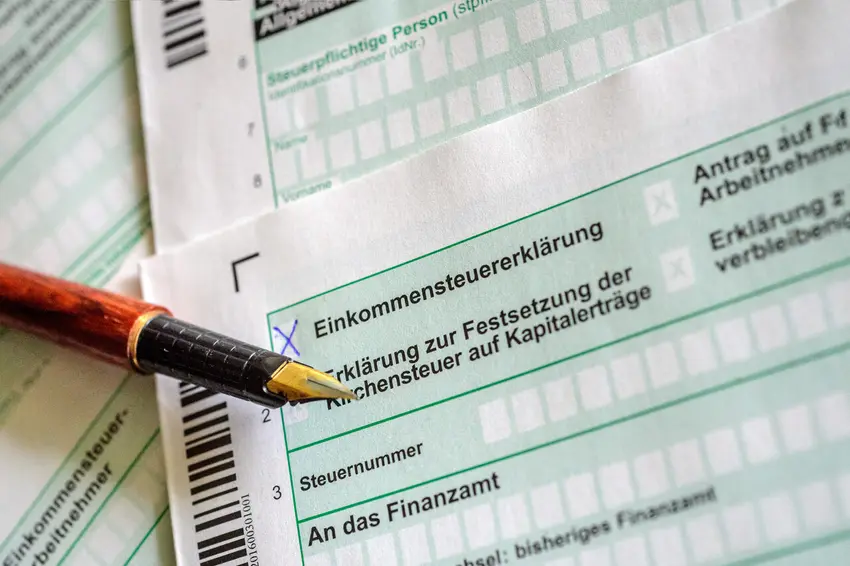
Every year, people from all walks of life are obliged to submit a tax return (Steuererklärung) for the previous tax year. These tax returns have to be filed with the relevant tax office (Finanzamt) by a certain date.
Here’s an overview who has to submit a return in Germany, along with a look at the relevant dates and rules.
Who has to submit a tax return?
The normal tax filing deadline applies to everyone who is obliged to submit an income tax return (Einkommensteuererklärung).
This includes freelancers (Freiberufler) and people who are self-employed (selbstständig), as well as anyone who has received wage replacement benefits during the relevant tax year, including; unemployment (Arbeitslosengeld), sickness- (Krankengeld), parental- (Elterngeld) or shortened working time benefits (Kurzarbeitsgeld).
The same rule applies if you earn more than €520 a year rental income.
Other income, like from renting out your car, for example, is subject to the currently applicable exemption limits (which change annually).
READ ALSO: The top tax deductions often overlooked by employees in Germany
When do I have to submit my 2025 tax return?
If you would like to prepare your tax return for 2024 yourself, you have until Thursday, July 31st, 2025.
Bear in mind that this is one month earlier than last year (when tax deadlines were extended following the COVID pandemic).
In Germany, there are longer deadlines for people who submit their returns via a tax advisor (Steuerberater) or income tax association.
What is the deadline for submitting tax returns via a tax advisor?
If you are unable to complete your tax return on time, seeking the support of a tax advisor (Steuerberater) is one way to delay the deadline.

In contrast with tax returns that you complete yourself, there is generally a seven-month deferral period when filing with a tax advisor or with an income tax assistance organisation (Lohnsteuerhilfeverein).
The deadline for your 2024 income tax return, if submitted by a professional, is Sunday, March 1st 2026.
In practice, this means Monday, March 2nd, 2026.
When tax deadlines fall on a weekend or public holiday in Germany, the window for submitting your tax return shifts to the next working day.
READ ALSO: The 2025 tax deadlines that Americans in Germany need to know
Under certain circumstances, the tax office may request your tax return before the usual deadline – and there’s precious little wiggle room to object if this happens. Any individual deadline set by the tax office is binding.
What happens if I submit my tax return too late?
If you’re worried you may miss the deadline this year, make sure you let the tax office know.
If you’re a self-filer, you will have to request an extension in writing from the relevant tax office.
Explain why you need an extension and propose a new deadline. There is no obligation on the part of the tax office to grant an extension, but it’s worth a shot. Even Germany's Finanzamt is willing to show mercy in cases of serious illness, a longer stay abroad or a move.
If you do miss the deadline, and you can’t win an extension either by explaining your circumstances of engaging the services of a Steuerberater or Lohnsteuerhilfeverein, you will be hit with a late filing surcharge in the form of a fine, which needs to be paid in addition to the taxes you owe.
The surcharge generally amounts to a minimum of €25 per late month or 0.25 percent of your assessed tax obligation, and will be applied automatically, starting from August 1st, 2025.
If you still don’t file your taxes after missing the deadline, the tax office may send you a formal request with a new deadline. Missing this can result in an additional penalty payment (Zwangsgeld). The penalty is typically between €100 and €500, but it can be much higher in severe cases.
READ ALSO: The planned money and tax changes in Germany in 2025
Comments